So, what is "Eco-friendly"?
- Planning of lot lines to not cross wooded areas
- Low density development
- Sensitivity to water-shed areas
- Protecting existing natural elements
- Utilization of clean, renewable energy
- Self contained waste systems
- Recycling and composting
Many developers choose to ignore this process up
front and attempt to make up for it afterword...a
process that rarely works. Planting a few palm trees
can't make up for the scraping of precious woods.
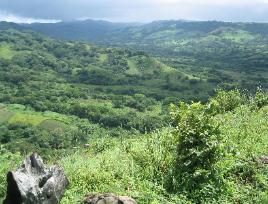
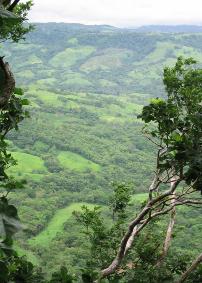
A few facts you should consider about the environment, our continuing dependence
on fossil fuels and what you could do right now;
Switching from just one of your normal light bulbs to a compact fluorescent lamp
(CFL)could save nearly a quarter ton of coal over its lifetime.
India's greenhouse-gas emissions could rise 70% by 2025
China's total electricity demand will rise and estimated 2,600 gigawatt's by 2050,
which is the equivalent of adding four 300-megawatt power plants every week for
the next 45 years.
India's energy consumption rose 208% from 1980 to 2001, even faster than China's,
and nearly half the country still lacks regular access to electricity.
Closer to home, the US is home to less than 5% of Earth's population but produces
25% of the CO2 emissions.
The average American is responsible for 20 times as much C02 emission annually as
the average Indian.
Sources; National Geographic August 2005, Time. April 3, 2006
Regardless of how you choose to invest in Nicaragua,
please try to do so with a conscience.
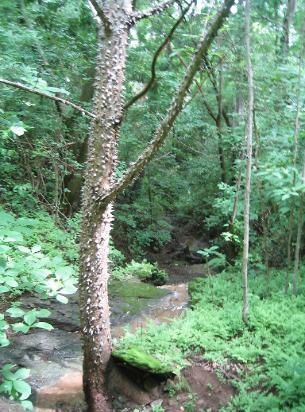
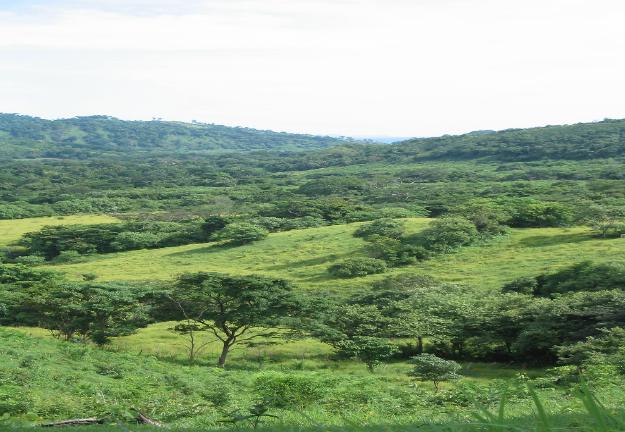
Developing with the environment in mind.
Being conscious of the landscape and
respecting the fragility of nature.
Using this delicate balance as your guiding
principle while planning your project.
A few examples of these would be;
Being conscious of the landscape and
respecting the fragility of nature.
Using this delicate balance as your guiding
principle while planning your project.
A few examples of these would be;
 |
| |
 |
| |
 |
| |
 |
| |
 |
| |
 |
| |
 |
| |
 |
Long before it became fashionable to be green,
we at Nica Dev were doing our part to protect
the environment and it's resources.
We were not only the first "eco-devlopment" in
Nicaragua, we are still considered the best.
This isn't a"Green wash". We are serious.
we at Nica Dev were doing our part to protect
the environment and it's resources.
We were not only the first "eco-devlopment" in
Nicaragua, we are still considered the best.
This isn't a"Green wash". We are serious.